BSG Clinical Services Excellence Award 2026 highly commended submission by Mr Lee Martin, Neurogastroenterology Dietitian.
Background and Need for Change
Functional dyspepsia (FD), chronic nausea and vomiting syndrome (CNVS), and idiopathic gastroparesis (Gp) are highly prevalent disorders of gut–brain interaction (DGBI) and motility disorders associated with substantial symptom burden, impaired quality of life, and frequent healthcare utilisation. Our hospital provides secondary and tertiary gastroenterology care where these patients represent a significant proportion of referrals to dietetic services.
Despite this burden, evidence-based dietary interventions for these conditions are limited, and national and international guidelines provide little specific direction. Patients frequently report dissatisfaction with existing treatments and uncertainty regarding dietary management.
Prior to service redesign, our centre faced several challenges which had a direct impact on patient care:
- High referral volumes with long waiting times for one-to-one dietetic input leading to delayed access to dietetic support
- Lack of standardised dietary advice leading to variable patient advice from doctors, nurses and dietitians
- Limited patient education regarding disease mechanisms contributing to poor patient understanding and reduced self-management
- Inefficient use of specialist dietetic expertise increasing costs and clinician burden
These pressures resulted in delayed access to care and variable patient experiences. Traditional one-to-one models were no longer sustainable and did not meet increasing demand. There was therefore a clear requirement for a scalable, evidence-informed, and patient-centred approach.
Service Innovation and Overcoming Challenges
To address these challenges, we developed a novel, dietitian-led virtual group education pathway for patients with FD, CNVS and GP with the evidence based theory of treating them collectively as gastric sensorimotor disorders. This redesigned pathway enabled efficient use of specialist expertise while maintaining clinical safety and individualisation (figure 1).
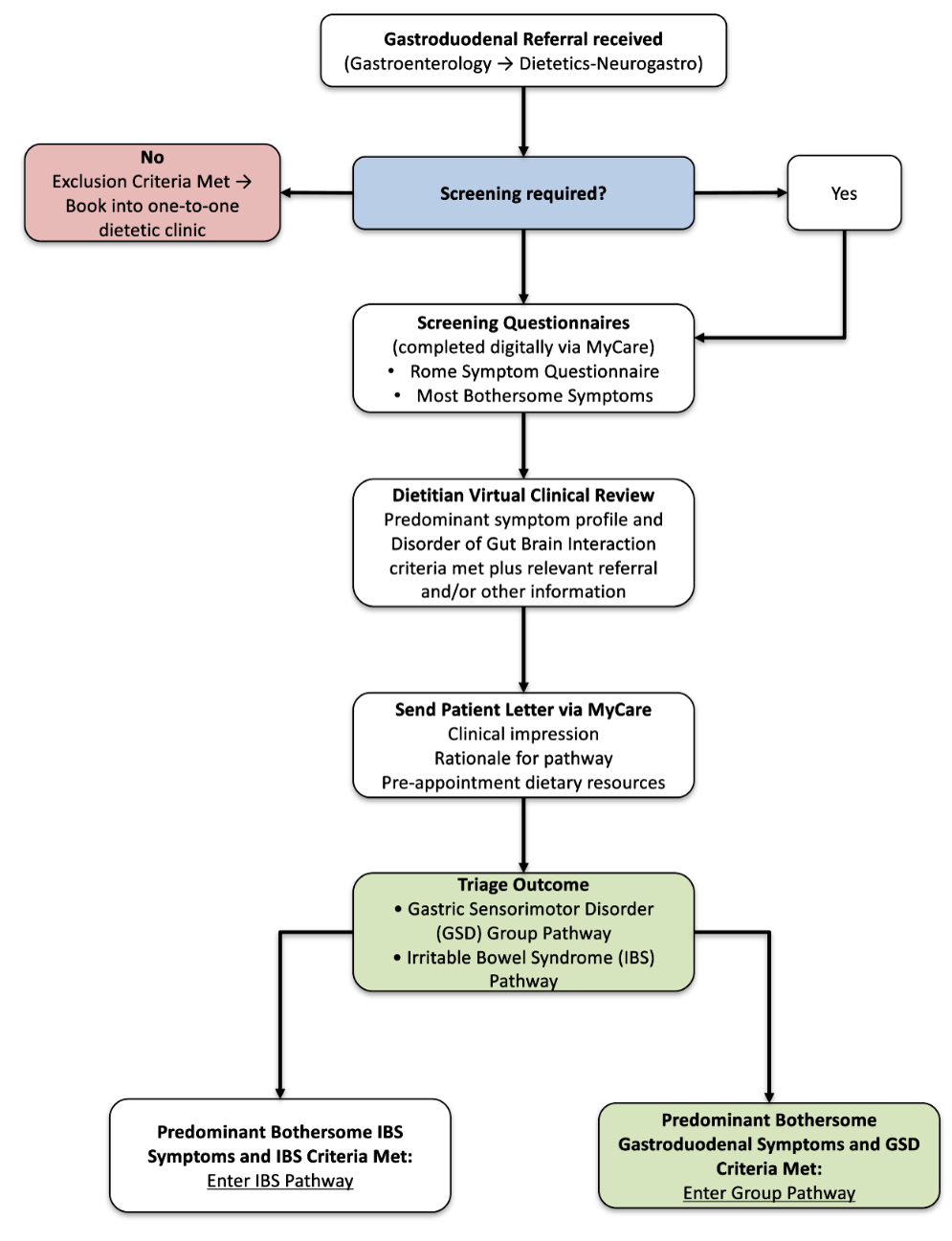
Figure 1. Referral, dietitian virtual screening and triage pathway for patients referred to the gastroduodenal dietetic service.
Key Innovations
- Integrated Digital Screening and Triage
- All dietetic referrals underwent structured symptom assessment using Rome IV-based questionnaires
- Patients were then triaged into more appropriate pathways based on their reported most bothersome symptoms and nutritional risk factors
- Each patient received a personalised screening letter summarising their condition and recommended resources.
- Standardised Group Education Pathway
- Two structured 90-minute virtual sessions delivered via Zoom.
- Led by a specialist neurogastroenterology dietitian.
- Covered evidence-informed dietary strategies, pathophysiology and psychoeducation and practical dietary application
- Included graded food exposure and management of overlapping symptoms.
- Multidisciplinary and Safeguarding Approach
- Clear exclusion criteria (e.g., eating disorders, severe underweight).
- Alternative individualised pathways for complex cases.
- Close collaboration with gastroenterologists and MDT members.
- Patient-Centred Design
- Interactive group format encouraging peer support.
- Use of accessible materials and hospital-hosted resources.
- Feedback mechanisms embedded in routine practice.
- Outcome Monitoring
- Systematic evaluation of feasibility, adherence, acceptability, and satisfaction using questionnaires built into electronic health record systems and feedback surveys distributed via patient portal
- Power BI utilised for service outcomes including waiting times and attendance rates
- Key results below
Outcomes and Impact on Patient Care
Service Feasibility
- 94 patients were included in the service evaluation (20% only had FD, 8% only had Gp, and 7% only had CNVS, the remaining 65% had overlap of 2 or 3 of these conditions)
- At screening, patients identified their most bothersome symptoms as nausea, bloating, vomiting, pain and weight loss.
- Median time to first dietetic contact reduced from 84 to 37 days post group intervention
- Group attendance: 65% (Session 1), 61% (Session 2)
- DNA rates of 20-25% and cancellation rates of 10-15% comparable to other group irritable bowel syndrome (IBS) services
- Demonstrates operational sustainability within routine NHS practice.
Patient Engagement and Adherence
- 78% adhered to dietary advice ≥75% of the time, highlighting comparable adherence to established IBS group programmes
- Adherence equal across the different gastric sensorimotor disorders (FD, CNVS, Gp)
- Overall, advice on avoiding/modifying high-fat foods was deemed most useful (73%)
Patient Understanding and Acceptance
- 65% found dietary materials easy to understand
- 61% found advice easy to follow
- Most agreed the session length (76%) was appropriate, with a good balance between lecturing and discussion (70%). Most participants reported being able to discuss what they wanted to (70%).
Patient Satisfaction
- 94% would recommend the service to a friend or family member
- 88% felt better educated about their condition
- 82% satisfied with session content
- 70% felt confident to self-manage following the group programme
Patient Feedback and points to improve
- All respondents supported access to a session recording (100%)
- Despite excellent acceptance and satisfaction over two group sessions 82% felt a one-to-one dietitian follow up would still be beneficial
- Additional feedback from patients for improving sessions are shown in figure 2
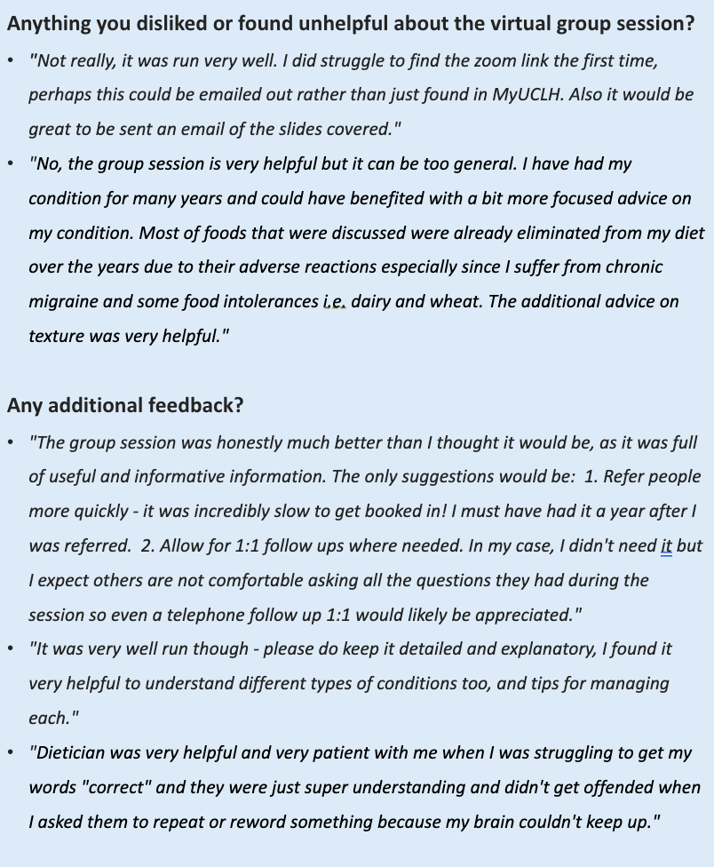
Figure 2: A selection of patient feedback comments regarding the delivery of the virtual gastric sensorimotor disorder dietary group education sessions
Learning Points and Transferability
A lot was learnt from the creating and evaluation of this novel group application with the key points outlined in table 1.
Table 1: Key learning points and relevance for other gastroenterology services
Key Learning Point | What We Learned | Relevance for Other Teams / Services |
1. Group education is acceptable in gastric sensorimotor disorders | Patients with severe and overlapping gastric sensorimotor conditions were able to engage effectively with a virtual group education format when appropriately supported. | Challenges assumptions that complex DGBI patients require only one-to-one care; supports scalable group models in specialist gastroenterology services. |
2. Early structured screening improves pathway efficiency | Digital symptom screening and dietitian-led triage reduced inappropriate referrals and accelerated access to care. | Screening tools can be adopted by other services to prioritise patients, reduce waiting times, and optimise use of specialist dietetic resources. |
3. Standardisation enhances equity of care | Consistent dietary messaging supported by standardised written and online resources reduced variation in advice and improved patient confidence. | Standardised education pathways can improve equity, reduce clinician variability, and ensure consistent quality across services. |
4. Psychoeducation is essential | Explaining gut–brain interactions and symptom mechanisms improved patient understanding and engagement with dietary strategies. | Highlights the importance of integrating psychoeducation into routine care for DGBIs to support self-management and adherence. |
5. Hybrid models are valuable | Combining group education with selective one-to-one follow-up balanced service capacity with individual patient needs. | Hybrid pathways offer a flexible, patient-centred approach that can be tailored to local workforce constraints and patient complexity. |
6. Routine evaluation drives service improvement | Embedded data collection on attendance, adherence, acceptability, and satisfaction enabled ongoing service refinement. | Demonstrates the value of continuous service evaluation to inform iterative improvement and support business cases for innovation. |
Influence on Wider Practice
- The pathway provides a reproducible framework for other gastroenterology dietetic services.
- It aligns with BSG recommendations for dietetic involvement in refractory FD including access to an interested clinician, education and access to brain gut behavioural support.
- Findings will be disseminated through academic publication and conference presentations.
- The model informs future developments including recorded sessions and hybrid Q&A formats.
Transferability
This approach can be adopted by:
- Secondary and tertiary gastroenterology services
- Centres with limited specialist dietetic capacity
- Integrated care systems seeking cost-effective solutions
Core components (screening, structured education, outcome monitoring) are adaptable to other DGBIs and chronic GI conditions.
Summary and Conclusion
This innovative dietitian-led virtual group education pathway was developed in response to rising demand, limited resources, and unmet patient need in gastric sensorimotor disorders.
Through structured screening, standardised education, and systematic evaluation, we have:
- Improved access to specialist care
- Achieved high patient engagement and adherence
- Enhanced patient understanding and confidence
- Delivered sustainable, scalable care
- Created a transferable model for wider adoption
- Provided a platform for future research and development
The service represents a demonstrable improvement in quality, efficiency, and patient experience. It addresses a significant evidence and service gap and provides a practical framework aligned with modern NHS priorities.
We believe this work exemplifies clinical service excellence through innovation, patient-centred design, and measurable impact on care.
Read More