Writing and submitting a conference abstract can feel daunting, even if you have done it before, but it’s an exciting opportunity to share your work, celebrate innovation, and contribute to the advancement of gastroenterology and hepatology nursing. The key is to keep it simple, structured, and focused.
Sharing Nurse led innovation and clinical excellence through conferences is an important way to advance practice, celebrate achievements, and contribute to professional and academic growth. Yet, many Nurses hesitate to submit abstracts due to uncertainty about where to start, limited time, or lack of confidence in writing skills. Every project that improves patient care, even in small ways, is worth sharing. Abstracts don’t have to be perfect — they just need to clearly tell the story of why your work matters and what impact it’s making.
Abstract writing is a valuable skill that helps nurses communicate their impact and drive improvement across gastroenterology and hepatology services. Having an abstract accepted is a professional milestone. Share the achievement within your department or organisation to encourage others. Presenting at conferences not only raises the profile of nursing within gastroenterology and hepatology but also inspires wider improvements in patient care.
Writing the abstract:
Start with thinking about why you work matters, Begin by briefly explaining the need your project addressed — for example, improving bowel preparation rates, patient education on biologic therapy, or supporting liver disease self-management. Reviewers value abstracts that clearly identify a clinical gap and show how your work makes a difference to patients or services.
Decide the one key takeaway you want readers/reviewers to remember (e.g., “A nurse-led clinic halved missed infusion appointments”). Everything in the abstract should support that message.
Structure of abstracts for the BSG Live meeting are as follows:
Introduction: 1-2 sentences that clearly indicate the scientific question of the study and its clinical (or other) importance.
Methods: sufficient information to be able to understand the design, the analytical techniques and the statistics or type of analysis used in the study or project.
Results: objective data answering the scientific question(s).
Conclusions: only conclusions directly supported by the results, along with implications for clinical practice, avoiding speculation and over-generalisation.
The word limit for the Abstract is 3000 Characters, Focus on clarity over complexity. Reviewers appreciate abstracts that are easy to follow and clearly linked to improving patient care or service delivery.
Usually the work that is submitted is part of a team project, though not always. Including your collaborators in the process strengthens authorship and builds confidence, as well as offers an opportunity to celebrate and show appreciation for support and hard work.
Peer and colleague feedback can be really helpful; Ask colleagues, mentors, supervisors or clinical educators in your area to review your draft. They can help ensure your message is clear and professional.
Mind the details
- Start Early- give yourself plenty of time to get it right.
- Check abstract guidelines carefully (word count, formatting, references), as it will be published exactly as it is submitted.
- Use accepted terminology for gastroenterology and hepatology practice, not overly complex terminology or jargon.
- Proofread carefully — small errors can distract reviewers.
- Abbreviations should be defined on first use.
Submitting the Abstract:
The online abstract submission system used for BSG Live is a simple step-by-step process, which starts with creating an account. There is an abstract template for download, and the online system will prompt you to provide the required information in the required sections. The person who submits the abstract will be the contact person for the abstract, but you can enter details of all the contributing authors of the work.
There are three options for your abstract for consideration for BSG Live:
Poster: Where your abstract will be considered and scored as a possible poster presentation at BSG Live. Poster presentations are where the author(s) create a large electronic Poster to be displayed on electronic poster screens throughout the conference. Specifications about the size and content of posters will be sent out with notification of abstract acceptance. Presentations are given a slot on a set day where the lead author should be available to stand with their poster and speak with viewers, and poster judges, and answer any questions.
Flash Poster: Flash Poster Presentations will take place each lunchtime on a bank of mini stages within the exhibition hall. Each presenter will have approximately 5 minutes for their flash presentation and will need to produce 3 slides summarising their abstract in addition to creating an e-poster for the online poster library.
Oral: Only the highest scoring abstracts are considered for oral presentations in the ‘free papers’ sessions at BSG Live. These presentations are given in person, using slides and presenting to an audience.
The system will ask you to input the following details alongside your abstract:
- The abstract’s title (Limited to 20 words)
- The name, affiliations and contact email addresses† for all authors.
- Additional Information:
- Agreement to publication of accepted abstracts on the BSG Website.
- Agreement of the BMJ GUT Licence agreement
- Copyright details, where you must declare any permissions you have for data you do not own but have permission to use.
- Declaration regarding publication status - Papers must not be published or accepted for publication in a peer reviewed journal prior to submission.
- Conflict of interest declaration for all authors.
- Co-Author consent agreement for submission of the abstract.
You can add up to 1 figure or table alongside your abstract during the submission process.
There should be no author details, locations or affiliations mentioned in your abstract, as they are judged blind.
There should also be a non-NHS email for the main contact and the presenting author. We ask this to ensure that important conference information is received and not blocked by firewalls.
You can save your submission as a draft and return to edit the submission until the close of submission, but pay attention to the key dates for the end of the submission period for abstracts!
Abstract Topics
The abstract topic is a general heading under which the abstract will be reviewed and published. Abstracts must be submitted under the conference topic that best describes the subject of the abstract. Your abstract will be allocated to the committee related to which ‘topic’ you selected. All nursing abstracts, regardless of specialism, come to the BSG Nurses committee.
The BSG Programme Committee reserves the right to decide on the final topic assignment of the abstract submission.
1. Endoscopy
2. Endoscopy Video
3. Inflammatory Bowel Disease
4. Liver
5. Oesophagus
6. Gastroduodenal
7. Pancreas and neuroendocrine
8. Small Bowel & Nutrition
9. Colon & Anorectal
10. Neurogastroenterology: functional disorders, motility and clinical physiology
10. Gastroenterology service: development, delivery, IT
11. Education & Training
12. Nurse
13. Pathology
14. Sustainability
Using AI to produce an abstract
The BSG recognises that the use of artificial intelligence (AI) and Large Language Model tools in research publications is expanding rapidly. As such, the BSG requires that authors who use AI tools in the preparation of an abstract or in the collection and analysis of data must be transparent in disclosing this upon the submission of their abstract. Authors are fully responsible for the accuracy and content of their abstract, even those parts produced by an AI tool, and are thus liable for any breach of publication ethics or inaccuracies. AI tools cannot be listed as an author of an abstract, as AI tools do not meet the requirements for authorship; as non-legal entities, they cannot assert the presence or absence of conflicts of interest nor manage copyright and license agreements.
Abstract reviewing:
All abstracts will go through a blind peer review carried out by reviewers selected by the BSG Programme Committee. These reviewers are usually members of the BSG committees.
Reviews are undertaken by at least 2 reviewers, independently, and scores are submitted online. Scores range from:
- Reject
- Average poster
- good poster
- Excellent poster/possible oral
- Oral Presentation
The abstract submission and selection process can be very competitive, and there are always more abstracts than there is room for at the conference.
Outcome of abstract reviews:
Notification of acceptance or rejection will be sent to the submitter, presenting authors and all co-authors as stated in the abstract submission. Feedback on abstracts is not given due to the number of abstracts reviewers have to review. The decision on which format each accepted abstract will take is made by the Programme Committee and is final.
You can choose then whether to accept or decline the invitation to present your work at BSG Live. Presenting authors must attend the conference in person.
Information about presenter bursaries will be shared at this time.
When notified of acceptance, the Presenting Author is required to accept the offer by registering for the BSG Live conference (if not already registered) and paying in full by the abstract presenter registration deadline given on the key dates at the top of the invitation Email. If you need further guidance, or specific guidance around how to attach an endoscopy video to your abstract please visit the BSG abstract submission guidance page.
What can make my abstract stand out:
- Lead with significance- why does your work matter?
- Write a clear and focused abstract using appropriate language.
- Give specific details about your methods and results, such as numbers of participants or responses, avoiding vague language.
- Emphasise how nursing leadership or innovation made the impact happen
Suggested References for Further Reading
- Polit, D.F. & Beck, C.T. Nursing Research: Generating and Assessing Evidence for Nursing Practice.
- Benner, P. From Novice to Expert: Excellence and Power in Clinical Nursing Practice.
- NMC (2018). The Code: Professional Standards of Practice and Behaviour for Nurses, Midwives and Nursing Associates.
- NHS England. Quality, Service Improvement and Redesign (QSIR) Toolkit.
- Greenhalgh, T. How to Read a Paper: The Basics of Evidence-Based Medicine.
- BMJ & BSG abstract submission guidance (current year).
- Royal College of Nursing. Writing for Publication Guidance.
- Abstracts - BSG LIVE 2026
Examples of accepted abstracts from Previous years:
All successful abstracts are submitted in a supplement in the June edition of GUT, examples of successful abstracts from previous years can be found through searching the journal supplements online in the journal archive here.
Author's biography:
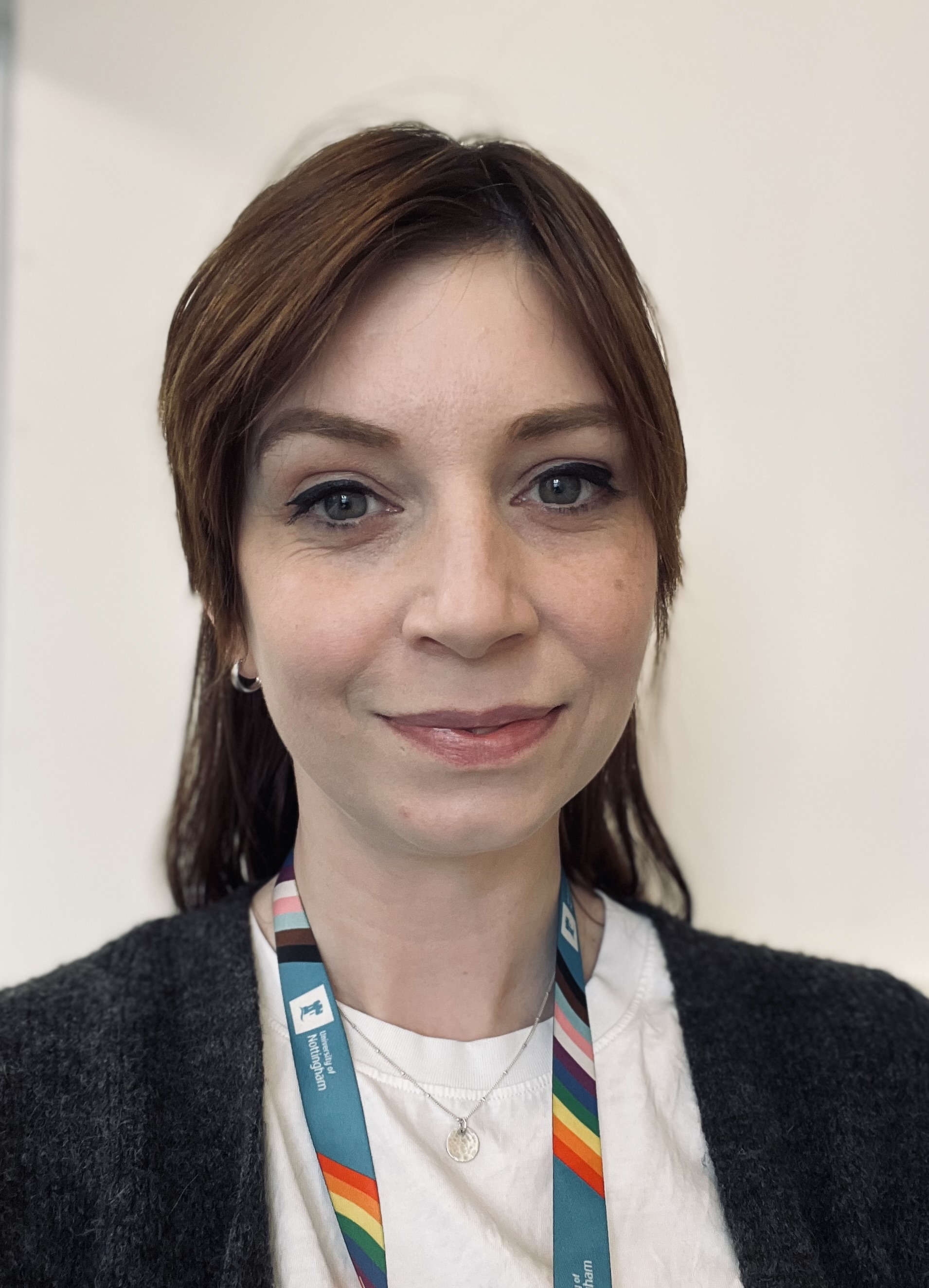
Dr Shellie Radford is a Clinical Academic and Senior Research Fellow in Gastroenterology based at the University of Nottingham and the Nottingham University Hospitals NHS Trust. She qualified as a Registered Nurse in 2013 and began specialising in gastroenterology in 2016, building on roles in ward-based care and critical care. She completed a Master of Science by Research in 2020, investigating the lived experiences of adults with inflammatory bowel disease (IBD), and followed this with a Postgraduate Certificate in Gastrointestinal Disorders in 2021.
Since being awarded her PhD in 2023, focused on implementing and evaluating small-bowel ultrasound services for Crohn’s disease, Dr Radford has led and been involved in a range of clinical trials and research initiatives aimed at improving the care and quality of life for people with long-term gastrointestinal conditions. She was a core member on development the 2025 BSG IBD Guidelines. As an IBD Nurse Specialist and clinical trials methodologist, she combines hands-on patient care, research leadership, and academic supervision and mentorship.